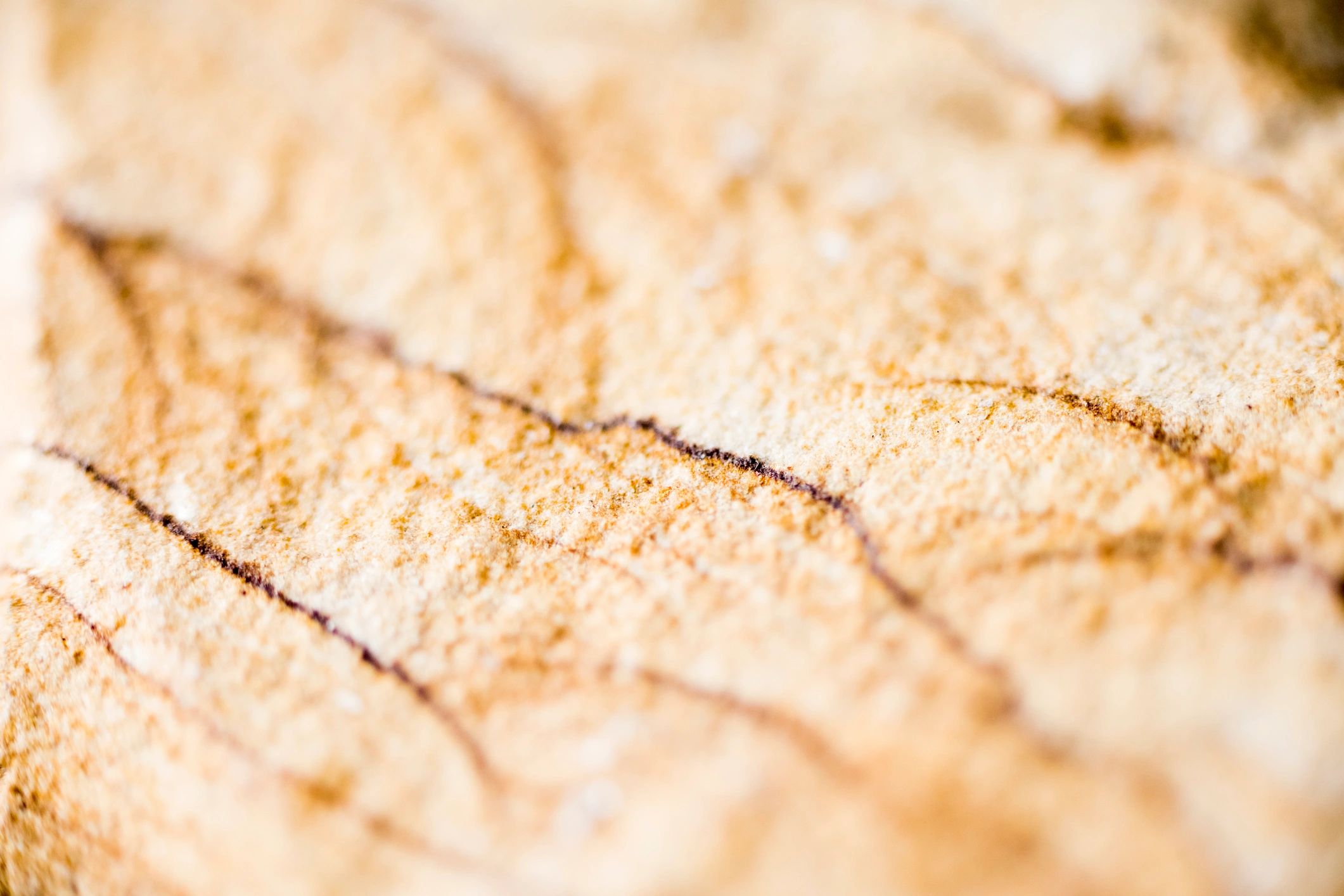
- Texture (grain size): Is it glassy, fine-grained (you can’t see crystals), or coarse-grained (crystals are obvious)?
- Structure (layering and fabric): Do you see bands, foliation, vesicles (bubbles), or rounded grains cemented together?
- Hardness (scratch test): Can it scratch glass? Can a steel nail scratch it? Hardness narrows options fast.
- Glassy with sharp edges → often obsidian (volcanic glass).
- Visible interlocking crystals → commonly igneous (like granite) or metamorphic (like gneiss).
- Layered, grainy, or fossil-bearing → often sedimentary (sandstone, limestone, shale).
- Waxy, very fine-grained, breaks with curved (conchoidal) fractures → often chert/flint or related silica-rich rocks.
- Strong foliation or “sparkly” aligned minerals → often metamorphic (schist, slate, phyllite).
Chert vs. quartzite Both can be hard and silica-rich. Chert is typically very fine-grained and breaks with smooth, curved fractures. Quartzite often shows a “sugary” granular texture and tends to break across grains with a more sparkly, granular surface. Basalt vs. dark metamorphic rocks Basalt is usually fine-grained and may show tiny holes (vesicles) from gas bubbles. Dark metamorphic rocks may show subtle foliation or a more “compressed” fabric—look for aligned minerals or faint banding. A simple “kit” for responsible identificationTip: When two stones look similar, focus on texture and fracture rather than color. Color can be misleading.
- Hand lens (10×) for grain and mineral checks
- Small magnet (helps flag iron-rich minerals)
- Steel nail or pocketknife (scratch testing)
- Streak plate (unglazed porcelain) for mineral streak
- Notebook + photos in natural light (record where you found it)