Basalt (Igneous)
Back to Geology · Back to Igneous
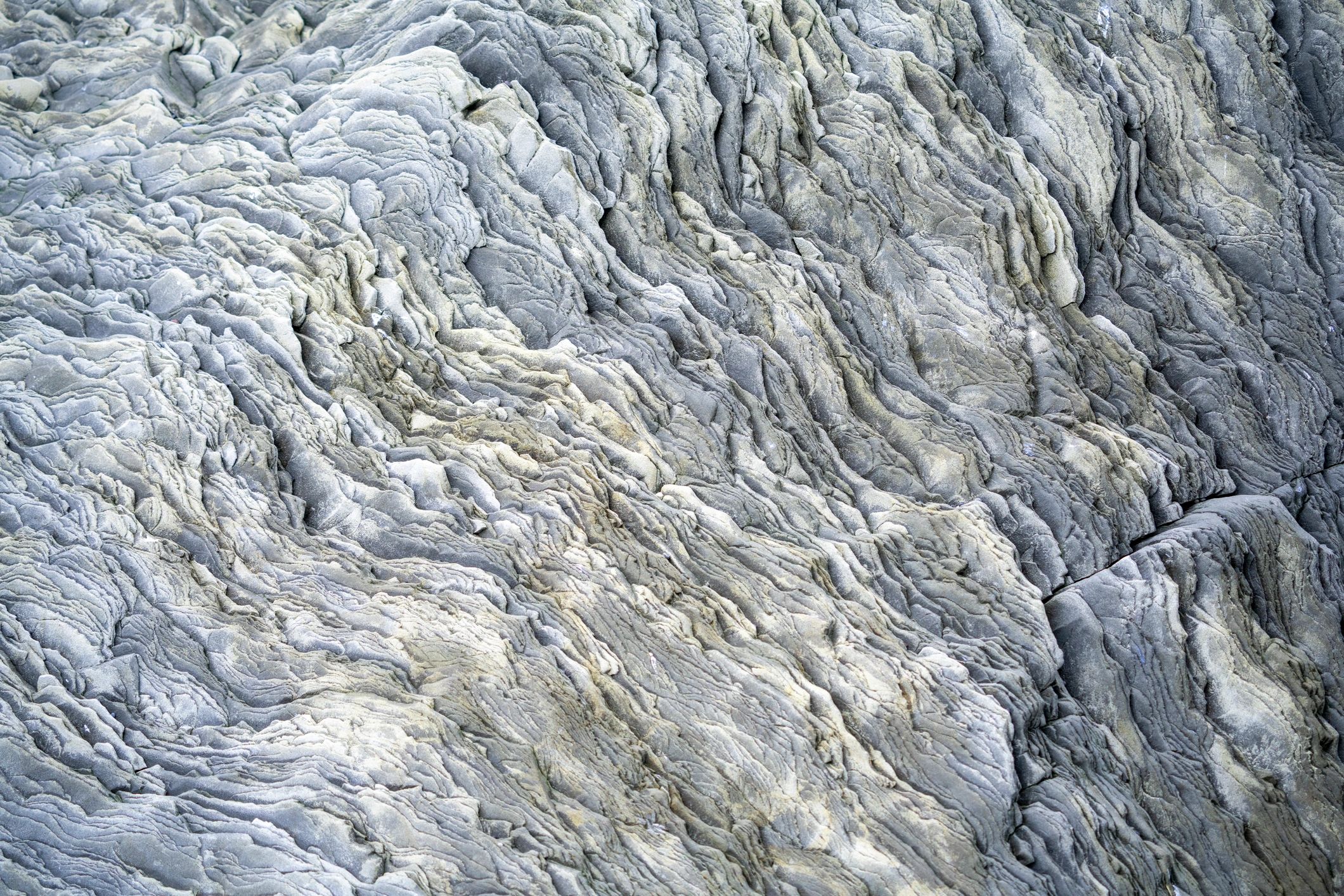
In plain terms
Basalt is Earth’s most common volcanic rock—fast-cooled lava that builds much of the ocean floor.
How it forms
Basalt forms when low-viscosity, iron- and magnesium-rich magma erupts and cools quickly at or near the surface. Rapid cooling produces fine crystals; very rapid cooling can produce glassy margins.
What to look for
- Dark gray to black color (not always diagnostic)
- Fine-grained texture; crystals often too small to see
- Vesicles (holes) in some flows; may be mineral-filled (amygdales)
- Columnar jointing in thick flows
Key takeaways
- Basalt is typically fine-grained due to rapid cooling.
- It’s a major component of oceanic crust.
- Vesicles indicate gas-rich lava.
- Columnar joints form from cooling contraction.
- Context (flow, dike, pillow lava) strengthens identification.