
Geology
Rocks vs. Stones (Geologist’s View)
How geologists use the words, how to read a sample, and how “stone” becomes a practical category in daily life and trade.
In plain terms
Rock is the scientific category. Stone is often a human-scale piece of rock—selected, sized, shaped, or used.
What is a rock?
A rock is a naturally occurring solid made of one or more minerals (or mineraloids). Geologists classify rocks by composition (what it’s made of) and texture (how the pieces fit together: grain size, crystal shapes, layering, and fabric).
What is a stone?
“Stone” is widely used for a piece of rock that’s handled or used: building stone, river stone, paving stone, gemstone, decorative stone. It’s not wrong—just less precise. In trade, “stone” often implies selection (color, durability, finish) rather than origin story.
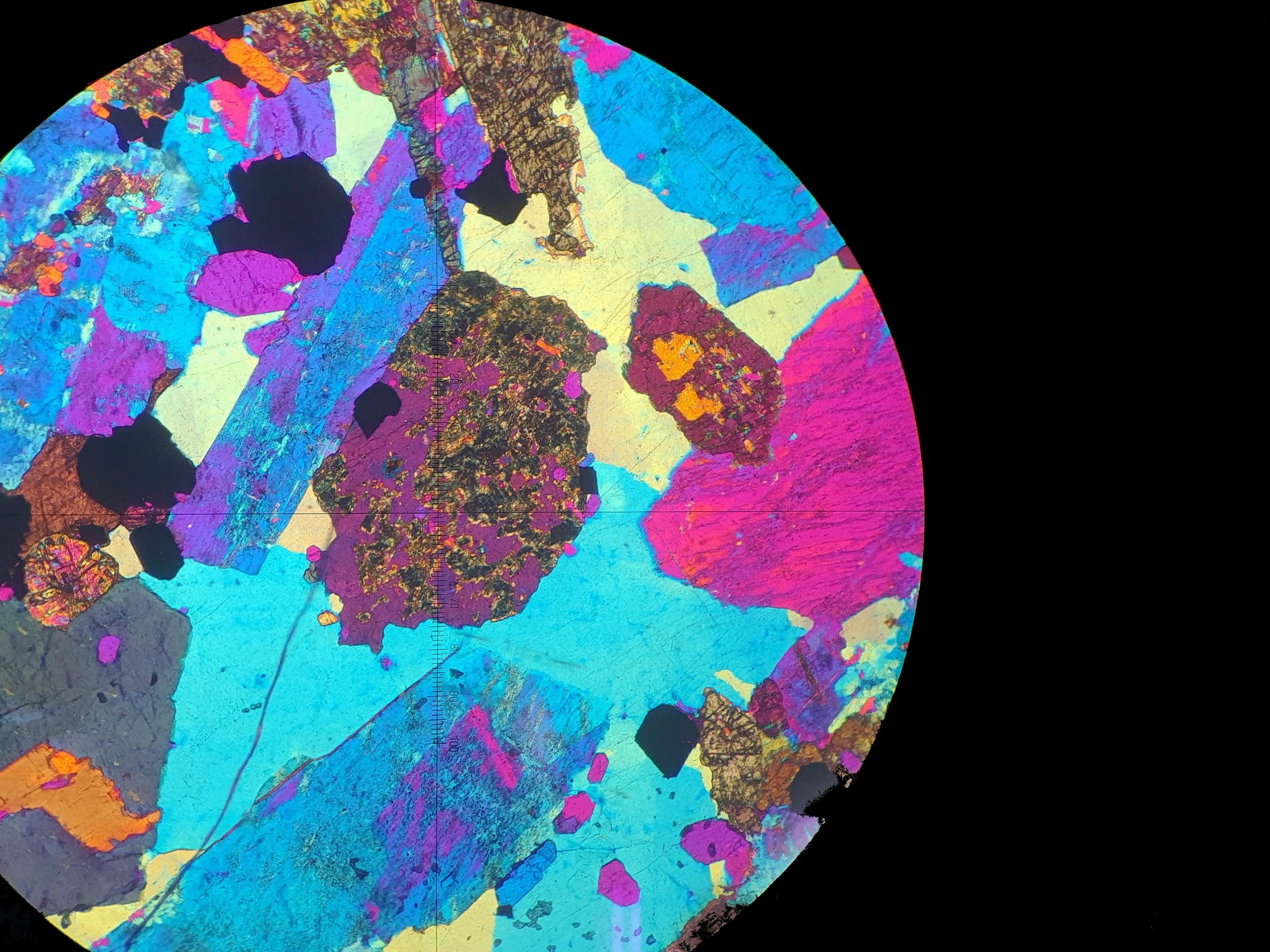
How geologists read a sample
- Context first: where it was found (outcrop, river, quarry, soil) and what’s around it.
- Texture: crystals vs. grains, glassy vs. crystalline, layered vs. massive, rounded vs. angular.
- Simple tests: hardness, streak, magnetism, acid reaction (carbonates), density/heft.
- Working name: a field ID (e.g., “fine-grained mafic volcanic rock” → likely basalt).
- Confirm: thin section, XRD/XRF, SEM/EDS, or other lab methods when needed.

Key takeaways
- “Rock” is the geologic category; “stone” is often a usable piece of rock.
- Texture is usually the fastest clue to origin.
- Minerals determine many properties (hardness, cleavage, weathering).
- Context matters: the same rock looks different in different settings.
- Lab methods confirm what field observations suggest.