Archaeology
Archaeology helps identify stones by connecting material, manufacture, and context. On this page, you’ll learn how archaeologists recognize stone types, trace sources, and interpret how people used stone across time.
Quick links: History · Materials · Identification Methods · Tools · Human Usage · Timeline




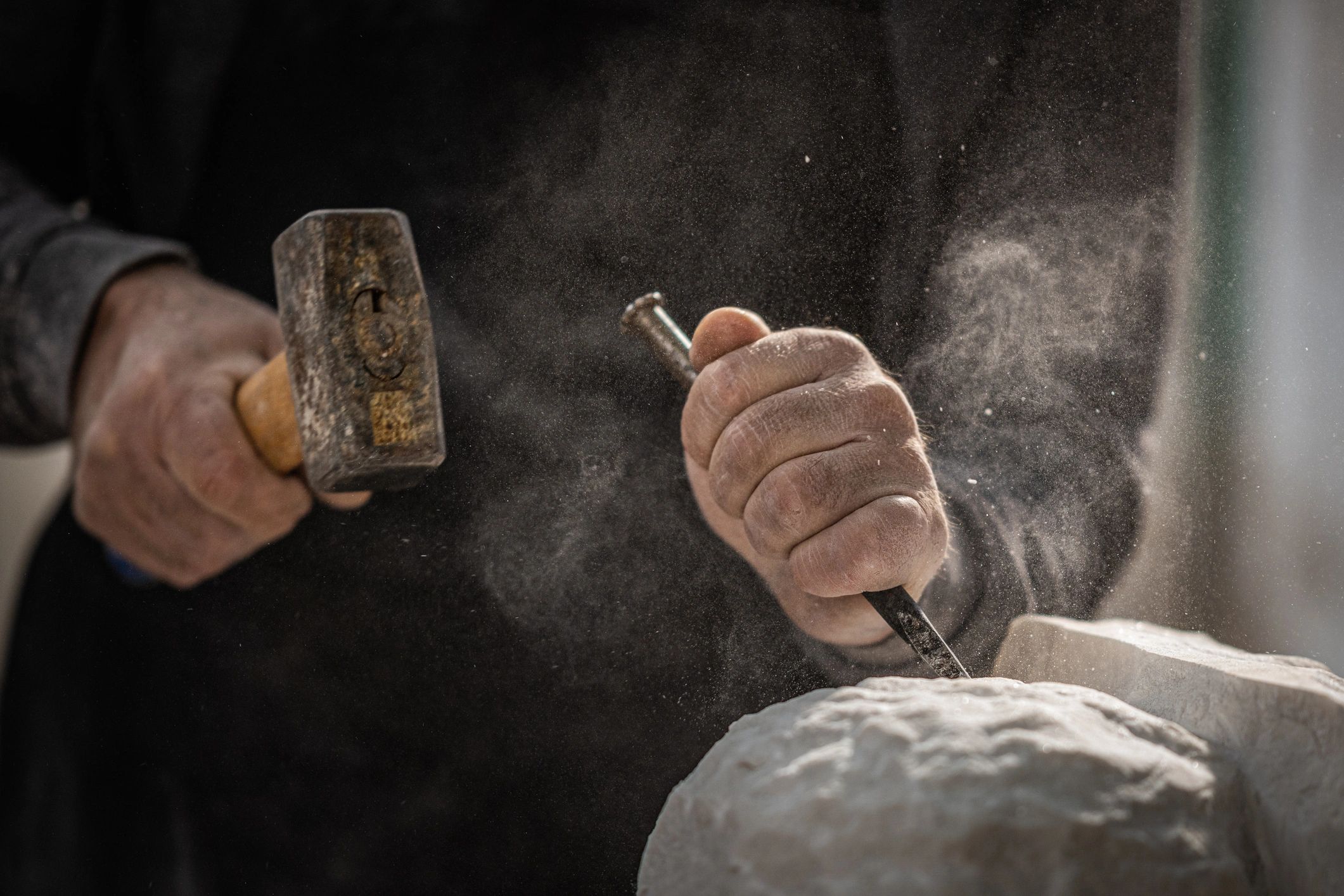
Table of contents
- 1. What archaeology adds to stone ID
- 2. Context: where a stone was found
- 3. Raw material selection and trade
- 4. Manufacturing traces and surface clues
- 5. Use-wear and residue: how stone was used
- 6. Sourcing: matching stone to landscapes
- 7. Microscopy and lab identification
- 8. Dating stone-related contexts
- 9. Architecture, quarrying, and building stone
- 10. Ethics, provenience, and documentation
- 11. Putting it together: a practical workflow
- Archaeology topic hubs
- Selected reading
Archaeology subpages
Chapter 1: What archaeology adds to stone ID
Geology tells you what a stone is. Archaeology helps you understand what a stone meant—how it was selected, shaped, moved, and used. The same material can signal very different behaviors depending on context, manufacturing traces, and associated finds. Archaeologists combine field observation with lab methods to move from “this looks like chert” to “this chert likely came from that source and was used for that task.” See Andrefsky 2005: 15–19.
In plain terms: Archaeology turns stone identification into a story: where it came from, how it was worked, and why it mattered.
Key takeaways
- Stone ID improves when you record context and associations.
- Manufacturing traces can narrow material and technique.
- Use-wear links stone to tasks (cutting, grinding, drilling).
- Sourcing connects artifacts to landscapes and exchange.
- Documentation is as important as the specimen itself.
Chapter 2: Context—where a stone was found
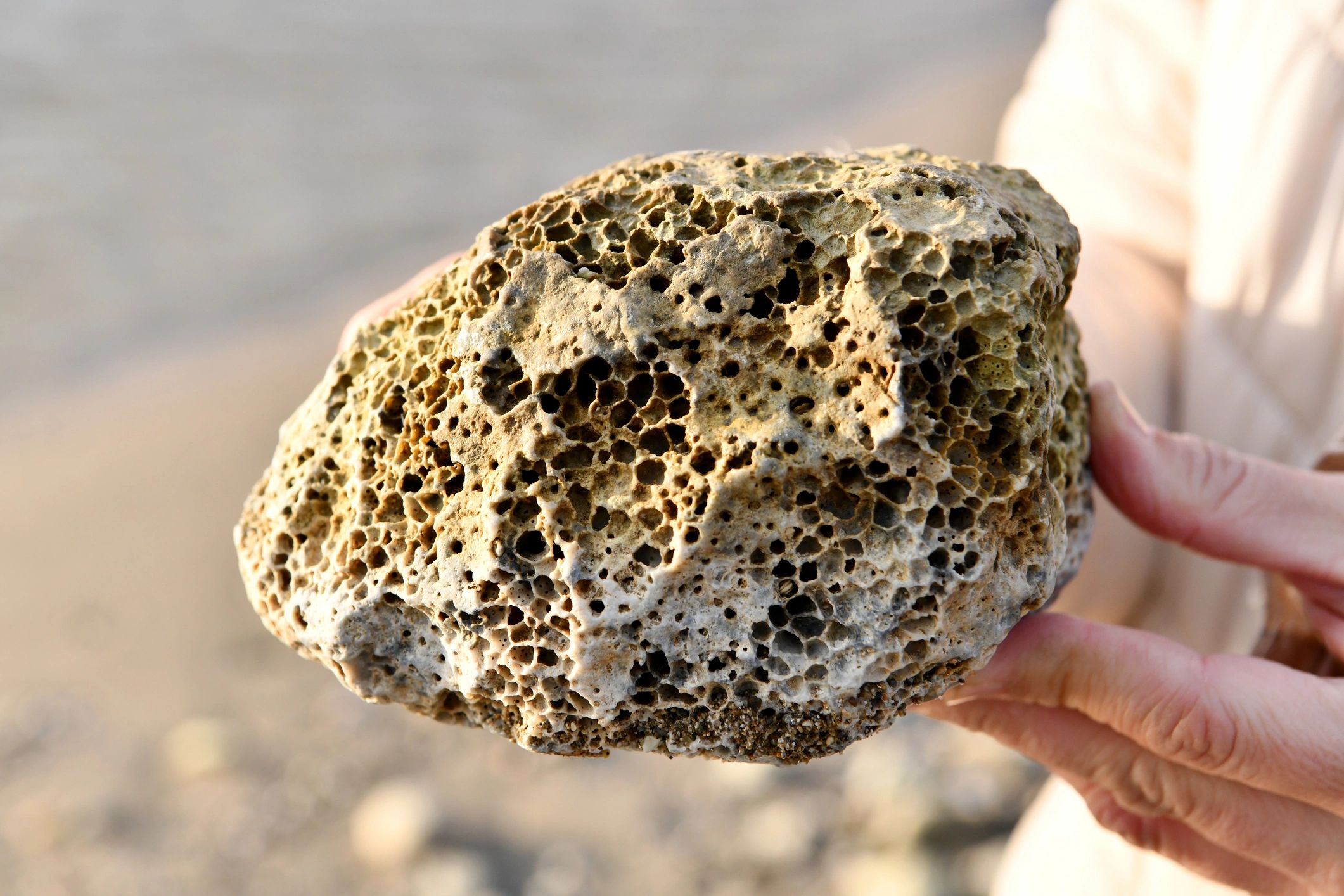
“Context” means the exact location and associations of a stone: its layer, feature, nearby materials, and relationship to structures or activity areas. A quartz pebble in a riverbed is geology; a quartz pebble in a hearth fill with burned bone and charcoal is archaeology. Context can also help distinguish natural stones from artifacts, and primary deposition from later disturbance. See Renfrew & Bahn 2016: 104–112.
In plain terms: A stone’s “address” (layer + place + neighbors) often matters more than the stone alone.
Key takeaways
- Record exact provenience before collecting.
- Associations can indicate function and age.
- Stratigraphy helps separate old from recent disturbance.
- Feature type (hearth, floor, pit) changes interpretation.
- Photographs and notes preserve context after removal.
Chapter 3: Raw material selection and trade
People choose stone for reasons: fracture behavior, hardness, color, symbolism, and availability. Archaeology studies these choices to understand procurement (local collection vs. quarrying), exchange networks, and craft traditions. Distinctive materials—obsidian, jade, lapis, certain cherts—can move far from their sources, leaving a trail of interaction. See Andrefsky 2005: 79–92.
In plain terms: If a stone is “out of place,” it may be evidence of travel, trade, or special value.
Key takeaways
- Material choice reflects performance and meaning.
- Non-local stone can signal exchange or migration.
- Quarrying leaves diagnostic landscape traces.
- Debitage patterns can indicate on-site toolmaking.
- Documenting sources supports ethical collecting and research.



Chapter 4: Manufacturing traces and surface clues
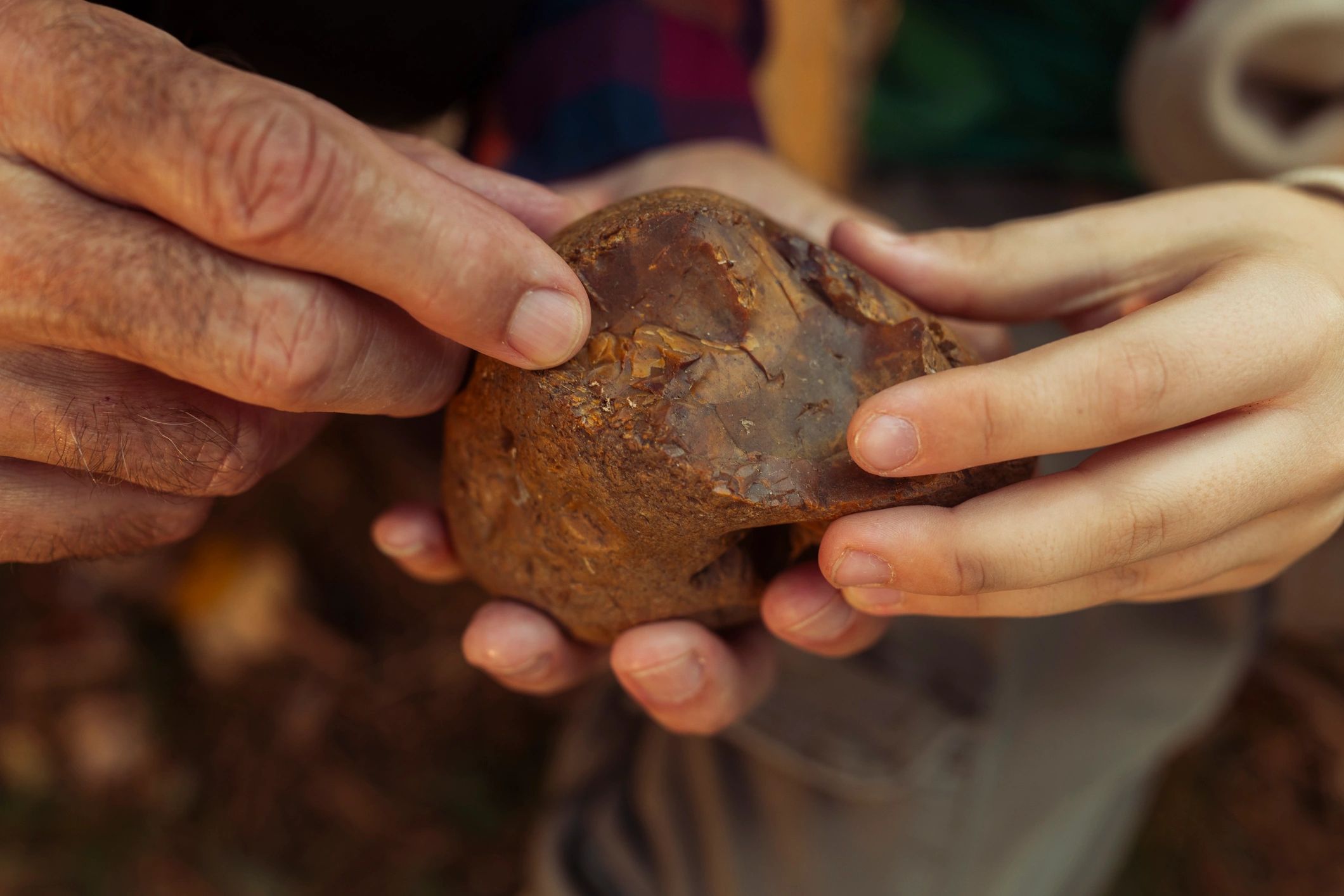
Stone carries evidence of how it was worked: flake scars, pecking, grinding striations, polish, and breakage patterns. These traces help distinguish natural fracture from intentional shaping, and they also help identify the stone’s mechanical behavior (e.g., conchoidal fracture in chert/obsidian). Manufacturing sequences (“reduction”) can be reconstructed from cores, flakes, and finished tools. See Cotterell & Kamminga 1987: 45–58.
In plain terms: Toolmaking leaves “fingerprints” on stone—patterns you can learn to recognize.
Key takeaways
- Look for repeated, patterned flake scars.
- Grinding and pecking create distinctive textures.
- Breakage can indicate use, accident, or post-depositional damage.
- Debitage helps reconstruct manufacturing steps.
- Surface clues often guide which lab tests to run.
Chapter 5: Use-wear and residue—how stone was used
Microscopic edge damage, polish, and striations can indicate cutting plants, scraping hides, drilling shell, or working wood. Residues (starch grains, phytoliths, pigments) can sometimes survive on stone surfaces, especially in protected micro-cracks. Use-wear studies connect material properties to function and help separate “looks like a tool” from “was used as a tool.” See Odell 2004: 133–148.
In plain terms: Stone tools can show tiny “wear patterns” that reveal what they did.
Key takeaways
- Use-wear often requires magnification and good lighting.
- Polish + striations can indicate worked materials.
- Residues can support functional interpretations.
- Cleaning methods can destroy residues—document first.
- Function and material choice are tightly linked.
Chapter 6: Sourcing—matching stone to landscapes
Sourcing connects artifacts to geological sources through field survey, reference collections, and analytical methods (petrography, geochemistry). Even when exact sources are uncertain, archaeologists often work with “source regions” or “material groups” that still reveal patterns of mobility and exchange. Sourcing is most powerful when paired with careful context and typology. See Shackley 2005: 1–12.
In plain terms: Sourcing asks: “Where did this stone likely come from?”
Key takeaways
- Reference samples are essential for confident sourcing.
- Some stones are distinctive; others require lab work.
- Source regions can be meaningful even without exact quarries.
- Combine sourcing with tool types and context for best results.
- Document uncertainty clearly in notes and labels.

Chapter 7: Microscopy and lab identification
Field ID is a start; labs refine it. Petrographic microscopy can reveal mineral assemblages and textures; XRF can help characterize elemental composition; Raman and FTIR can identify certain minerals and pigments. Archaeology uses these methods to answer targeted questions—especially when visual ID is ambiguous or when sourcing is the goal. See Rapp & Hill 2006: 57–74.
In plain terms: Labs help when your eyes can’t confidently separate similar-looking stones.
Key takeaways
- Choose tests based on a clear research question.
- Microscopy helps identify minerals and textures.
- Geochemical methods support sourcing and grouping.
- Non-destructive options exist for sensitive objects.
- Keep chain-of-custody and metadata with samples.
Chapter 8: Dating stone-related contexts
Stone itself is often difficult to date directly, so archaeologists date the context: charcoal in a hearth, organic residues, or stratigraphic relationships. In some cases, techniques like OSL (optically stimulated luminescence) can date sediments, and obsidian hydration can provide relative/approximate age estimates under controlled conditions. See Renfrew & Bahn 2016: 220–238.
In plain terms: You usually date the layer and associated materials—not the stone alone.
Key takeaways
- Stratigraphy is a primary dating tool.
- Radiocarbon dates associated organics, not stone.
- OSL can date sediments in some settings.
- Some stone-specific methods exist but require caution.
- Good sampling strategy starts in the field.
Chapter 9: Architecture, quarrying, and building stone
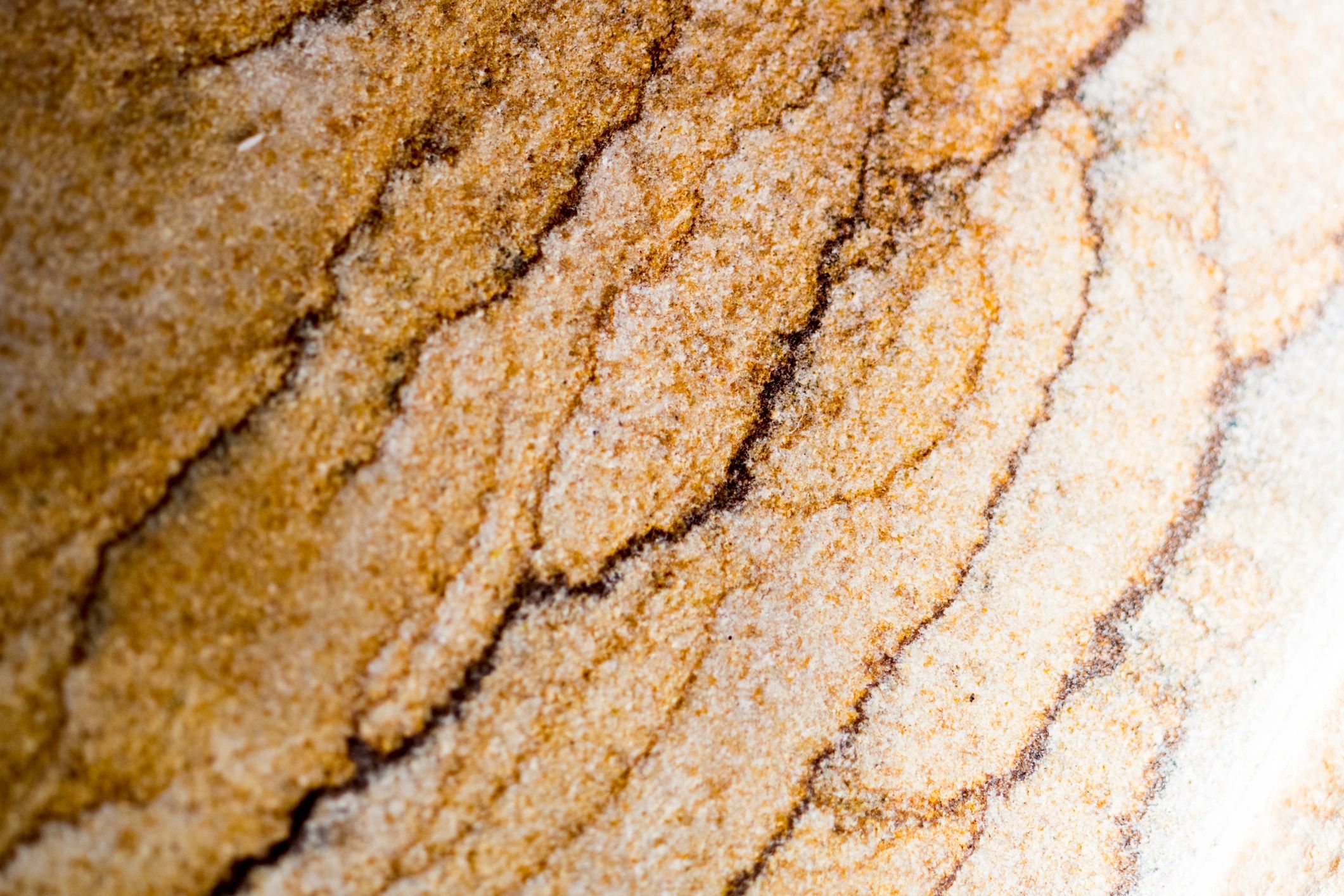
Buildings and monuments preserve stone choices at scale. Archaeologists study masonry styles, tool marks, mortar, and stone decay to identify materials and construction sequences. Quarry marks and extraction scars can connect architecture to specific landscapes. Even “ordinary” building stone can reveal labor organization and regional traditions. See Rapp & Hill 2006: 201–214.
In plain terms: Walls and monuments are stone “assemblages” that record choices, skills, and supply chains.
Key takeaways
- Tool marks can indicate quarrying and finishing methods.
- Stone selection affects durability and weathering patterns.
- Masonry style can help with relative dating.
- Quarries and transport routes are part of the story.
- Document stone condition for conservation decisions.

Chapter 10: Ethics, provenience, and documentation
Stone artifacts without provenience lose much of their scientific value. Ethical archaeology prioritizes legal excavation, permissions, and transparent documentation. For collectors and traders, keeping acquisition records and avoiding illicit material protects both heritage and the integrity of identification claims. See Renfrew & Bahn 2016: 612–620.
In plain terms: Without trustworthy “where it came from” information, stone objects become hard to interpret and easy to misrepresent.
Key takeaways
- Provenience is part of identification quality.
- Document acquisition and context whenever possible.
- Follow laws and cultural heritage protections.
- Use clear labels and stable IDs for collections.
- Share methods and uncertainty transparently.
Chapter 11: Putting it together—a practical workflow
A practical archaeology-first stone identification workflow starts with careful documentation, then moves to observation, comparison, and targeted testing. Use the subpages below as deeper guides for each step. See Odell 2004: 9–18.
In plain terms: Start with context and careful notes, then use your eyes, then your tools, then the lab—only as needed.
Key takeaways
- Photograph, measure, and record provenience first.
- Describe material and surface traces systematically.
- Compare to reference collections and known sources.
- Use targeted tests when visual ID is uncertain.
- Write conclusions with evidence and uncertainty.
Next: Identification Methods and Tools are the fastest way to build practical skill.
Archaeology topic hubs
Use these hubs to explore archaeology-informed stone identification by material families and methods. (If a hub page isn’t live yet, this link will be enabled once it’s created.)
Also see: Materials · History · Human Usage · Timeline
Selected reading
These references are starting points for archaeology-focused stone identification, lithic analysis, and geoarchaeology.
- Andrefsky, W. 2005. Lithics: Macroscopic Approaches to Analysis (2nd ed.). Cambridge University Press.
- Cotterell, B., & Kamminga, J. 1987. The Formation of Flakes. American Antiquity 52(4): 675–708.
- Odell, G. H. 2004. Lithic Analysis. Springer.
- Rapp, G., & Hill, C. 2006. Geoarchaeology: The Earth-Science Approach to Archaeological Interpretation (2nd ed.). Yale University Press.
- Renfrew, C., & Bahn, P. 2016. Archaeology: Theories, Methods, and Practice (7th ed.). Thames & Hudson.
- Shackley, M. S. 2005. Obsidian: Geology and Archaeology in the North American Southwest. University of Arizona Press.
Explore more: History · Materials · Identification Methods · Tools · Human Usage · Timeline